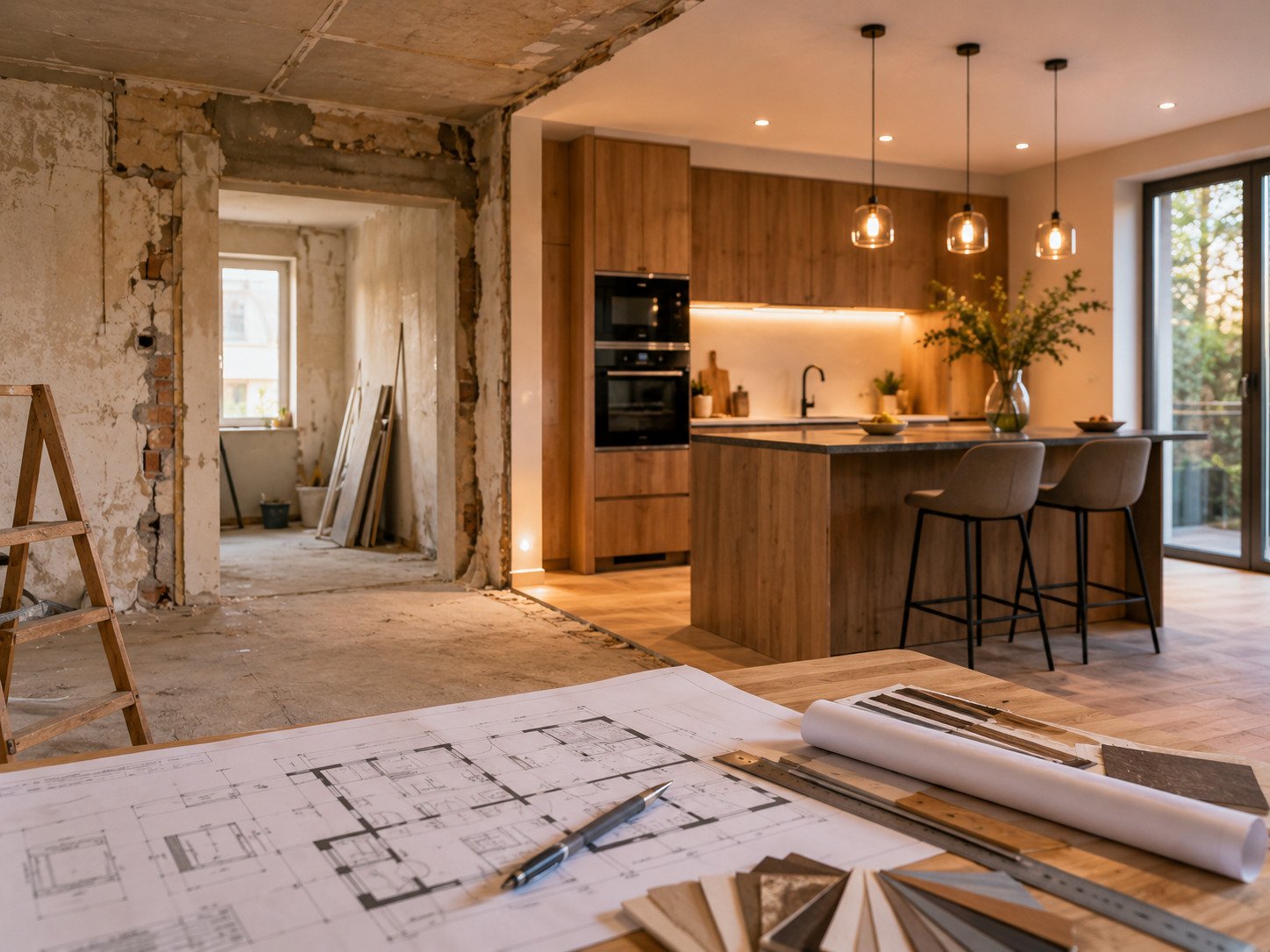
When it comes to maximising the potential of your Airbnb property, few things move the needle more than a strategic reconstruction. But with countless design options, budgets, and guest expectations to consider, how do you choose the right path forward?
One thing to recognise from the start: you are not the customer. The reconstruction should reflect your ideal guest's expectations, not your personal preferences. Setting strong personal preferences aside from the beginning makes every subsequent decision easier.
Step 1: Evaluate Your Property's Current Performance
Before you engage contractors or start ordering furniture, begin with data:
- Occupancy rate: Are you consistently booked, or are there long gaps between guests?
- Guest reviews: Do guests mention outdated spaces, poor functionality, or missing amenities?
- Pricing vs. competition: Do your nightly rates match comparable listings in your area?
If your performance lags behind top properties in the same location and category, it's a signal that reconstruction could deliver a strong return on investment.
Step 2: Define Your Target Guest
Your reconstruction decisions should reflect your ideal guest's expectations:
- Are you targeting couples, business travellers, groups, or families?
- Do your current finishes and amenities match what these guests expect?
- Will premium upgrades attract guests willing to pay more?
The clearer you define your target guest, the easier it becomes to design a space they'll love, and book again.
Step 3: Function First
Aesthetics matter, but functionality is what separates attractive listings from profitable ones. Good functionality also speeds up turnaround cleaning. Prioritise upgrades that improve:
- Guest flow: Open floor plans, logical furniture layout, uncluttered spaces
- Storage: Practical space for both guests and cleaning teams
- Durability: Materials and furniture that withstand heavy use without compromising on style
A space that works brilliantly for guests and can be cleaned in 90 minutes is worth more than a beautiful space that takes two hours to turn over.
Step 4: A Phased Approach
Reconstruction doesn't have to happen all at once. Many hosts benefit from spreading the investment in phases:
- Phase 1: Surface upgrades: paint, lighting, hardware, soft furnishings
- Phase 2: Furniture replacement, layout improvements, decorative touches
- Phase 3: Structural changes, bathroom and kitchen renovations, smart home features
This approach reduces revenue downtime, spreads the financial load, and lets you measure the impact of each phase before committing to the next.
Step 5: Set a Realistic Budget
Think of reconstruction as an investment in future income, not just a cost:
- Allocate 5–15% of the property's value toward meaningful upgrades
- Balance premium expenditure (a well-designed bathroom) with savings (durable but affordable flooring)
- Always factor in projected post-renovation income increases, not just costs
Understanding the return on each decision is what separates a smart renovation from an expensive one.
Step 6: Choose Partners Who Understand Airbnb
Not all contractors and designers are familiar with short-term rental dynamics. When choosing partners, look for experience with:
- Optimising guest flow and visual storytelling (critical for listing photography)
- Selecting furniture that holds up to rapid turnover cycles and cleaning
- Coordinating renovation timelines around existing booking calendars
- Preparing for professional photography and OTA search visibility
A partner who understands both design and performance metrics makes a measurable difference.
<FaqSection faqs={[ { q: "Is my property ready for reconstruction?", a: "Consider it seriously if your design is outdated or inconsistent, if guests mention the space in reviews, if maintenance issues are increasing, or if you've plateaued in revenue growth. A free property assessment will give you a clear picture of what would actually move the numbers." }, { q: "What's the typical ROI on an Airbnb reconstruction?", a: "Well-executed reconstructions typically deliver a 25–40% increase in achievable nightly rates and 15–30% improvement in occupancy. Return on investment is usually reached within 6–18 months. Results depend heavily on market positioning, scope, and quality of execution." }, { q: "Do I need to be in Prague during the reconstruction?", a: "Not necessarily. If you work with a management company like Evacanza, we can coordinate the entire reconstruction remotely and transition straight into property management immediately after the work is complete." }, { q: "How long does a typical reconstruction take?", a: "A light interior refresh can be completed in 1–2 weeks. A full reconstruction typically takes 4–8 weeks. The exact timeline depends on scope and contractor availability. A clear work plan is essential for protecting your booking calendar." } ]} />
<CtaBox title="Not sure whether reconstruction makes sense for your property?" body="Book a free property assessment with Evacanza. We'll evaluate current performance, identify what will move the ROI needle, and present a clear proposal with projected costs and income impact." source="choosing-right-reconstruction-for-property" linkText="Book a free assessment" />